


YPM 2.5 - Power to the People
First airtime BBC: 7 January 1988
Length: 30 minutes
| Cast | Crew | |
|
Details Will be added soon.. |
Details Will be added soon.. |
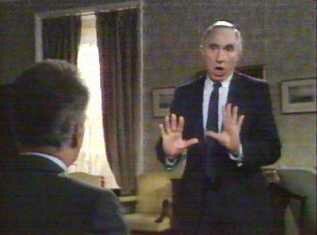 Plot: Jim is worried about local government. Local Councilors can make a mess of the whole thing and everyone will blame the central government for it. Especially the attitude of the Houndsworth Councilor Agnes Moorhouse is upsetting Jim. She is banning the police from entering her borough. Jim calls her a "wild woman" and he wants Humphrey to have a word with her to come to a gentleman's agreement.
Humphrey is very nervous about his meeting with Agnes Moorhouse. And as it turns out both of them have very different views about the government of Britain. Agnes is in favour of abolishing Parliament, the courts and even the monarchy. Humphrey is shocked by these radical ideas. So he is unable to find any grounds to come to an agreement with this "monster", as he describes her.
Dorothy visits Jim at his home at Number Ten. Jim wants to know what he should do about local government. Dorothy introduces him to an article by Professor Marriott in the latest Political Review. Instead of taking away power 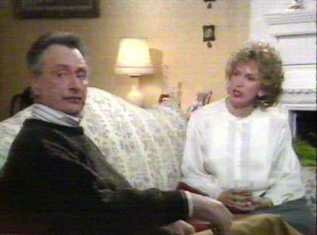 from local government and putting it into central government (the remedy Sir Humphrey would suggest), Professor Marriott proposes to genuinely give back power to the people. This is done by creating little voting districts of two hundred households (a city village) that elect their own Council. The Chairman of this Council is their representative in the borough. The five hundred city village representatives in each borough elect an Executive Council. This way, the people personally know their city village Councilor and have a direct influence on the policies of the borough. Suddenly Jim realises this will be a major reform and he would earn a place in the history books as the Great Reformer. He is very taken by this idea, but he cannot think of a name to call his new scheme. Dorothy however has a suggestion: democracy.
Sir Humphrey has also read the article by Professor Marriott. He is not taken by the idea. As he explains to Bernard, implementing this idea will surely lead to 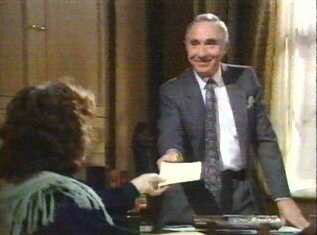 regional government. And this will mean that there will be less power for the central government.
Sir Humphrey also consults Sir Arnold on how to prevent Hacker from carrying out local government reform. Sir Arnold points out that it is very unlikely that the Marriott scheme will be implemented. It hinges on a complete reform of the Civil Service. And MP's are dependent on the Civil Service to get re-elected by reporting on their little triumphs and to conceal their daily disasters. No politician will destroy his own lifeline. Sir Humphrey just has to get Hacker to see this point.
Sir Humphrey has another meeting with Agnes Moorhouse. He informs her of the PM's plan to completely reform local government. Agnes is appalled by this idea. The people need leadership by her. If they got real influence on local government, they would only fall for conventional ideas. Sir Humphrey proposes both of them will stop the PM in reforming local government. He asks her written promise to stop harassing her local police. That will relieve some of 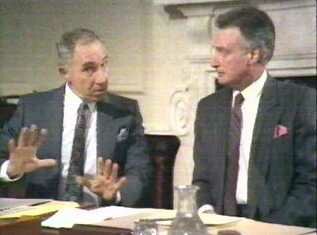 the urgency to reform local government. Humphrey and Agnes finally come to an agreement!
Sir Humphrey invites Professor Marriott to tell Jim and Dorothy about the Professor's upcoming article for the Political Review. Professor Marriott explains that under his scheme local MP's become genuinely independent. Their re-election will depend on the people and not on the backing of the local party. This will mean the end of the power of the party machine and the party whips. Jim is appalled by this idea! After Marriott has left he announces that it is out of the question. But what about Agnes Moorhouse? Then Sir Humphrey tells Jim about the deal he made with Agnes. Jim concludes that the nation is not ready for total democracy. Maybe the next century...or the one after that.
Rating (0-10): 7
Top 5 Quotes
 Sir Humphrey: "Prime Minister, I have had another word with her. To put it simply, Prime Minister, certain informal discussions took place involving a full and frank exchange of views, after which there arose a series of proposals which on examination proved to indicate certain promising lines of enquiry, which when pursuit led to the realization that the alternative courses of action might in fact, in certain circumstances, be susceptible of discreet modification, leading to a reappraisal of the original areas of difference and pointing a way to encouraging possibilities of compromise and cooperation which if bilaterally implemented with appropriate give and take on both sides might, if the climate were right, have a reasonable possibility at the end of the day of leading rightly or wrongly to a mutually satisfactory resolution."
Jim Hacker: "What the hell are you talking about?!"
Sir Humphrey: "We did a deal."- Agnes Moorhouse: "Animals have rights too, you know. A battery chicken's life isn't worth living. Would you want to spend your life packed in with six hundred other desperate, squawking, smelly creatures, unable to breathe fresh air, unable to move, unable to stretch, unable to think?"
Sir Humphrey: "Certainly not, that is why I never stood for Parliament." - Sir Humphrey: "Bernard, if the right people don't have power, do you know what happens? The wrong people get it!"
- Sir Humphrey: "But I am sure we agree on a fundamental basis of order and authority?"
Agnes Moorhouse: "That's half true."
Sir Humphrey: "Half true?"
Agnes Moorhouse: "You agree, I don't." - Sir Humphrey: "Now, what shall I call you? Miss Moorhouse?"
Agnes Moorhouse: "You can call me Agnes. What shall I call you?"
Sir Humphrey: "Uhm.., you can call me Sir Humphrey."
YPM 2.6 - The Patron of the Arts
First airtime BBC: 14 January 1988
Length: 30 minutes
| Cast | Crew | |
|
Details Will be added soon.. |
Details Will be added soon.. |
Plot: Jim Hacker has accepted to be the keynote speaker at the British Theatre Awards dinner. At first this seemed like a perfect PR opportunity. But now as the arts grant has only been increased by a little bit, he fears he will be ridiculed and accused of barbarism at the dinner. And that in front of twelve million television viewers. He, Bernard and Bill Pritchard (Jim's Press Secretary) are trying to think of a way so Jim can cancel his appearance. But the only thing they can think of is to start a war or arrange the death of a Cabinet colleague. Sir Humphrey joins the meeting and he suggests to increase the grant more. But Jim realises that Humphrey has a vested interest in the matter, as he is on the Board of the National Theatre. Jim asks Humphrey to have a word with the Director of the National Theatre, who is going to introduce Jim at the dinner. Jim suggests that Sir Humphrey points out that a knighthood is within the gift of the Prime Minister.
Sir Humphrey is having lunch with Managing Director of the National Theatre, Simon Monk. Using six breadsticks, Sir Humphrey informs Simon Monk of the increase of the arts grant by six million instead of the requested thirty million. Simon is shocked! Even more when he learns that only one-and-a-half of that increase is for the National Theatre. Sir Humphrey points out that the Prime Minister does not want Simon to compare this with other country's arts spending or refer to other examples of government waste. To make sure Simon does not accidentally mentions this, Sir Humphrey provides him with the appropriate data.
Next, there is a cocktail party with theatre people at Number Ten. Although Jim is trying to convey that he is a warm supporter of the British theatre, it is clear to all that he never even goes to the theatre. In the eyes of the theatre people he is a philistine. Sir Humphrey introduces him to Simon Monk. The Director of the National Theatre hints that the tone of his speech at the Awards dinner depends on the arts grant increase. If it is generous, he can say that this government has its priorities straight. But if it is not so generous, he can point to this government's barbarism and give funny examples of how the government is wasting its money in other areas.
Jim thinks that the National Theatre is seeing through his bluff. Dorothy suggests to Jim to call the National Theatre's bluff. The National Theatre has to spend half of its grant on the upkeep of the building. Simon Monk had complained about this burden. She suggests to sell the building, so they can spend their grant on plays and actors. Jim thinks this is a fantastic idea.
Just before the Awards dinner starts, Jim has another word with Simon Monk. Simon has just learned officially about the small arts grant increase and he is disappointed. Then Jim outlines "his" plan to sell off the National Theatre building. Simon Monk and Sir Humphrey are appalled by this idea, but cannot find an effective argument against it. Jim hints that this plan is just an option and that he thinks any jokes about government waste are not funny.
At the dinner Simon Monk publicly thanks the Prime Minister for making an increase in the arts grant possible, even though it is less than what most hoped for. He ends by proposing a toast for the patron of the arts: the Prime Minister!
Rating (0-10): 7½
Top 5 Quotes
- Jim Hacker: "So they insult me and then expect me to give them more money?"
Sir Humphrey: "Yes, I must say it's a rather undignified posture. But it is what artists always do: crawling towards the government on their knees, shaking their fists."
Jim Hacker: "Beating me over the head with their begging bowls."
Bernard Woolley: "Oh, I am sorry to be pedantic, Prime Minister, but they can't beat you over the head if they're on their knees. Unless of course they've got very long arms." - Jim Hacker: "Well, of course we do what we can. There are many calls on the public purse: inner cities, schools, hospitals, kidney machines..."
Actress one: "...tanks..."
Actress two: "...rockets..."
Actress three: "...H-bombs..."
Jim Hacker: "Well, we can't really defend ourselves against the Russians with a performance of Henry V." - Bernard Woolley: "May I just clarify this? You think the National Theatre thinks that you are bluffing and the National Theatre thinks that you think that they are bluffing, whereas your bluff is to make the National Theatre think that you are bluffing when you are not bluffing, or if you are bluffing, your bluff is to make them think you are not bluffing. And their bluff must be that they're bluffing, because if they're not bluffing they're not bluffing."
- Bernard Woolley: "I know, what about the death of a Cabinet colleague?"
Jim Hacker: "Is one imminent?"
Bernard Woolley: "No, but that would justify your absence without damaging your image."
Bill Pritchard: "We can hardly hope for that to fall on the right day. Well, not by accident." - Bernard Woolley: "Isn't it a bad idea to be associated with actors? I mean, their job is pretending to be what they're not and if you're seen with them, well, people might realise....."
Jim Hacker: "Go on, Bernard."
Bernard Woolley: "Well, I......I mean not realise, might suspect.....might think that your were....not that you were pretending, I mean entertaining....What was it you wanted to speak to Bill about?"
YPM 2.7 - The National Education Service
First airtime BBC: 21 January 1988
Length: 30 minutes
| Cast | Crew | |
|
Details Will be added soon.. |
Details Will be added soon.. |
Plot: Jim Hacker meets the Chief Whip and the Party Chairman. They are all worried that the bad state of British education can loose them the next election. Jim complains that he has got no power to change anything, only influence. The Party Chairman then suggest to let the wife of the leader of the Opposition pick out new curtains for Number Ten.
Bernard and Sir Humphrey also discuss education. Sir Humphrey explains that comprehensive schools should be retained, even if they do not work properly. This is because the teacher's unions want them to remain. What parents and children want is irrelevant, only what the teacher's unions want. In the Cabinet Room their discussion continues together with Jim Hacker. Sir Humphrey argues that the bad state of education is caused by the government's choice to let local councils run schools. He suggests to centralize the education system in order for Jim Hacker to do anything about it.
Next, Dorothy sees Jim Hacker. Jim asks her what he can do about education in the short run. For the short run she suggest to get into the news with a positive educational experiment: St. Margaret's school. The students at this school manufacture their own wooden furniture, market and sell it and use the profits to support local charities. Production issues are solved within their math and economics classes. Jim happily agrees to visit this school at his upcoming tour of the marginal constituencies.
The tour is a great success. His visit to St. Margaret's school is covered in all news bulletins. He got presented a wooden stool and was able to joke that no Prime Minister will loose his seat having this. Jim is very pleased with the publicity. After watching the coverage his wife keeps asking why parents cannot send their children to schools like St. Margaret's. Dorothy agrees: why not let parents decide for themselves what school to send their children to? Thus only the good schools survive. Jim points out that the Department of Education (DES) will not accept this. Dorothy agrees and therefore suggests to abolish the Department of Education. First Jim is shocked by this suggestion but then he realises this is the only way to reform education.
Next morning, Dorothy and Jim tell Sir Humphrey about their plan to let parents choose the school for their children to go to. Sir Humphrey is appalled and he argues that parents are the worst people to bring up children. And the choice of schools should be left to the trained professional: the teacher. Furthermore he points out that the Department of Education will block it. Then Jim really scares Sir Humphrey by telling him about "his" plan to abolish the Department. Sir Humphrey is unable to find good arguments against closing down the Department.
Sir Humphrey is so worried that he consults Sir Arnold about it. Sir Arnold thinks it is actually a very good plan, but it just must not happen. They agree to a plan that creates a lot of resistance to the abolishment of the DES. The only thing missing is a political weapon against Jim Hacker.
Next day however, Bernard delivers this political weapon to Sir Humphrey. It has turned out the wood used for production at St. Margaret's school was stolen. The DES is considering whether or not to prosecute. A cheery Sir Humphrey immediately sees Jim Hacker with this "good news". His stool was also made of the stolen wood and the whole country saw him praising St. Margaret's. Jim orders Sir Humphrey to stop the DES in prosecuting. Sir Humphrey points out that they will need their cooperation and that it is difficult to get cooperation if the death sentence has already been given. Jim Hacker immediately drops this silly idea of Dorothy to abolish the Department of Education. The department is saved! But not British education...
Rating (0-10): 6
Top 5 Quotes
- Sir Humphrey: "And with respect, Prime Minister, I think that the DES will react with some caution to your rather novel proposal."
Jim Hacker: "You mean they'll block it?"
Sir Humphrey: "I mean they'll give it the most serious and earnest consideration and insist on a thorough and rigorous examination of all the proposals, allied with detailed feasibility study and budget analysis, before producing a consultative document for consideration by all interested bodies and seeking comments and recommendations to be included in a brief, for a series of working parties who will produce individual studies which will provide the background for a more wide ranging document, considering whether or not the proposal should be taken forward to the next stage."
Jim Hacker: "You mean they'll block it?"
Sir Humphrey: "Yeah." - Jim Hacker: "What are you saying?"
Sir Humphrey: "I am saying that education will never get any better as long as its subject to all that tomfoolery in the town halls. I mean, just imagine what would happen if you put defence in the hands of the local authorities."
Jim Hacker: "Defence?"
Sir Humphrey: "Yes, give the local councils a hundred million each and ask them to defend themselves. We wouldn't have to worry about the Russians; we would have a civil war in three weeks." - Jim Hacker: "Math has become politicized: If it costs 5 billion pounds a year to maintain Britain's nuclear defences and 75 pounds a year to feed a starving African child, how many African children can be saved from starvation if the Ministry of Defence abandoned nuclear weapons?"
Sir Humphrey: "That's easy: none. They'd spend it all on conventional weapons." - Sir Humphrey: "You just don't leave important matters in the hand of those clowns [local councils]. And as you've left education to them, one must assume that until now you've attached little importance to it."
Jim Hacker: "I think it is extremely important. It could loose me the next election."
Sir Humphrey: "Ah!! In my naivety, I thought you were concerned about the future of our children."
Jim Hacker: "Yes, that too. For they get the vote at eighteen." - Sir Humphrey: "Hello Bernard, I hear the Prime Minister wants to see me?"
Bernard Woolley: "Yes, Sir Humphrey."
Sir Humphrey: "What's his problem?"
Bernard Woolley: "Education."
Sir Humphrey: "Well, it's a bit late to do anything about that now."
YPM 2.8 - The Tangled Web
First airtime BBC: 28 January 1988
Length: 30 minutes
| Cast | Crew | |
|
Details Will be added soon.. |
Details Will be added soon.. |
Plot: At Prime Minister's Question Time, Jim Hacker has publicly denied that the government is bugging MP Hugh Halifax's telephone. Sir Humphrey immediately goes to the PM to inform him that he has told a lie. The government has been tapping Halifax's phone, but nobody had informed Jim Hacker about this. Jim argues that he did not intend to mislead the House, so he did not actually lie. But Bernard points out that since the PM is ultimately responsible, he was deemed to know. Sir Humphrey explains that Jim should have cleared everything that he was going to say with the Civil Service, before saying anything in public. He must learn discretion. They leave it at that.
The matter however is not closed: Sir Humphrey is summoned to appear before the House Committee on Privileges regarding the alleged bugging of an MP's telephone. Sir Humphrey discusses with Bernard how to handle this. He ponders whether to confirm Jim's version or tell the truth.
Furthermore, Sir Humphrey is invited to be interviewed on a radio program about government and politics. Sir Humphrey has to get permission of the PM to participate. But Bernard believes this will not be a problem: it is on Radio 3 so nobody will be listening.
Jim Hacker gives Sir Humphrey some advise on how to handle Ludovic Kennedy during the radio interview. Subsequently they turn to the topic of Sir Humphrey appearing before the House Committee. Jim asks Sir Humphrey to confirm his statement in the House. But Sir Humphrey announces that he will not become part of a cover-up. He leaves for the radio studio, leaving Jim behind in a shattered state.
The radio interview is going as expected: Sir Humphrey talks lengthily and very discrete about the government and unemployment problem. When the interview is over, Ludovic Kennedy asks why Sir Humphrey did not tell the truth about unemployment. Sir Humphrey chuckles and says that unemployment can be halved but the government has not got the guts to do it. He even refers to the unemployed as parasites. Unknown to Sir Humphrey however, the tape is still recording.
Next day, Sir Humphrey receives a tape from the producer. Together with Bernard he listens to the interview. He is horrified when he realises that the off-the-record part is also included in the interview. He orders Bernard not to say a word about it to anyone.
Bernard however has lunch with the producer, as they are college friends. He gets him to hand over the master tape of the off-the-record part of the interview. He immediately goes to Jim. He tells Jim about the interview and what Sir Humphrey has said. Jim is horrified. Then Bernard shows him the master tape, that Sir Humphrey does not know they have. Jim proposes to listen to the interview together with Sir Humphrey.
As they listen to the interview, Jim acts as if he is very angry with Sir Humphrey and this could be grounds for dismissal of the Cabinet Secretary. Sir Humphrey offers to make a public statement denying the off-the-record part of the interview. Then Jim shows Sir Humphrey the master tape. Even though it will not be broadcasted, Jim says he is thinking about discussing disciplinary measures in Cabinet. Changing the subject, Jim asks Sir Humphrey what he decided on telling the Privileges Committee. Sir Humphrey tells that he is going to confirm Jim's version of the alleged MP's bugging issue. Jim is very pleased with this, but he decides to give Sir Humphrey the master tape after the Committee hearing.
Rating (0-10): 9
Top 5 Quotes
- Sir Humphrey: "So I gather, you denied that Mr. Halifax's phone had been bugged?"
Jim Hacker: "Well obviously, it was the one question today to which I could give a clear, simple, straightforward, honest answer."
Sir Humphrey: "Yes, unfortunately although the answer was indeed clear, simple and straightforward, there is some difficulty in justifiably assigning to it the fourth of the epithets you applied to the statement, inasmuch as the precise correlation between the information you communicated and the facts insofar as they can be determined and demonstrated is such as to cause epistemological problems of sufficient magnitude to lay upon the logical and semantic resources of the English language a heavier burden than they can reasonably be expected to bear."
Jim Hacker: "Epistemological? What are you talking about?"
Sir Humphrey: "You told a lie."
Jim Hacker: "A lie??"
Sir Humphrey: "A lie."
Jim Hacker: "What do you mean a lie?"
Sir Humphrey: "I mean you ... lied. Yes I know, this is a difficult concept to get across to a politician. You ..... ah yes, you did not tell the truth." - Sir Humphrey: "The interview was over. We were just chatting, harmlessly."
Bernard Woolley: "Harmlessly?!"
Sir Humphrey: "It was off-the-record!"
Bernard Woolley: "It was on the tape!!" - Sir Humphrey: "Well perhaps you could advise me, Prime Minister. Particularly if the questions are aggressive."
Jim Hacker: "Oh, the more aggressive the better. That puts the listeners on your side."
Sir Humphrey: "Nonetheless I may have to answer them."
Jim Hacker: "Why? You never answered my questions."
Sir Humphrey: "That's different, Prime Minister." - Jim Hacker: "Well, anyway. Why are we bugging Hugh Halifax? Is he talking to the Russians?"
Sir Humphrey: "No, the French actually. That's much more serious."
Jim Hacker: "Why?"
Bernard Woolley: "The Russians already know what we are doing." - Jim Hacker: "Honesty always gives you the advantage of surprise in the House of Commons."

